
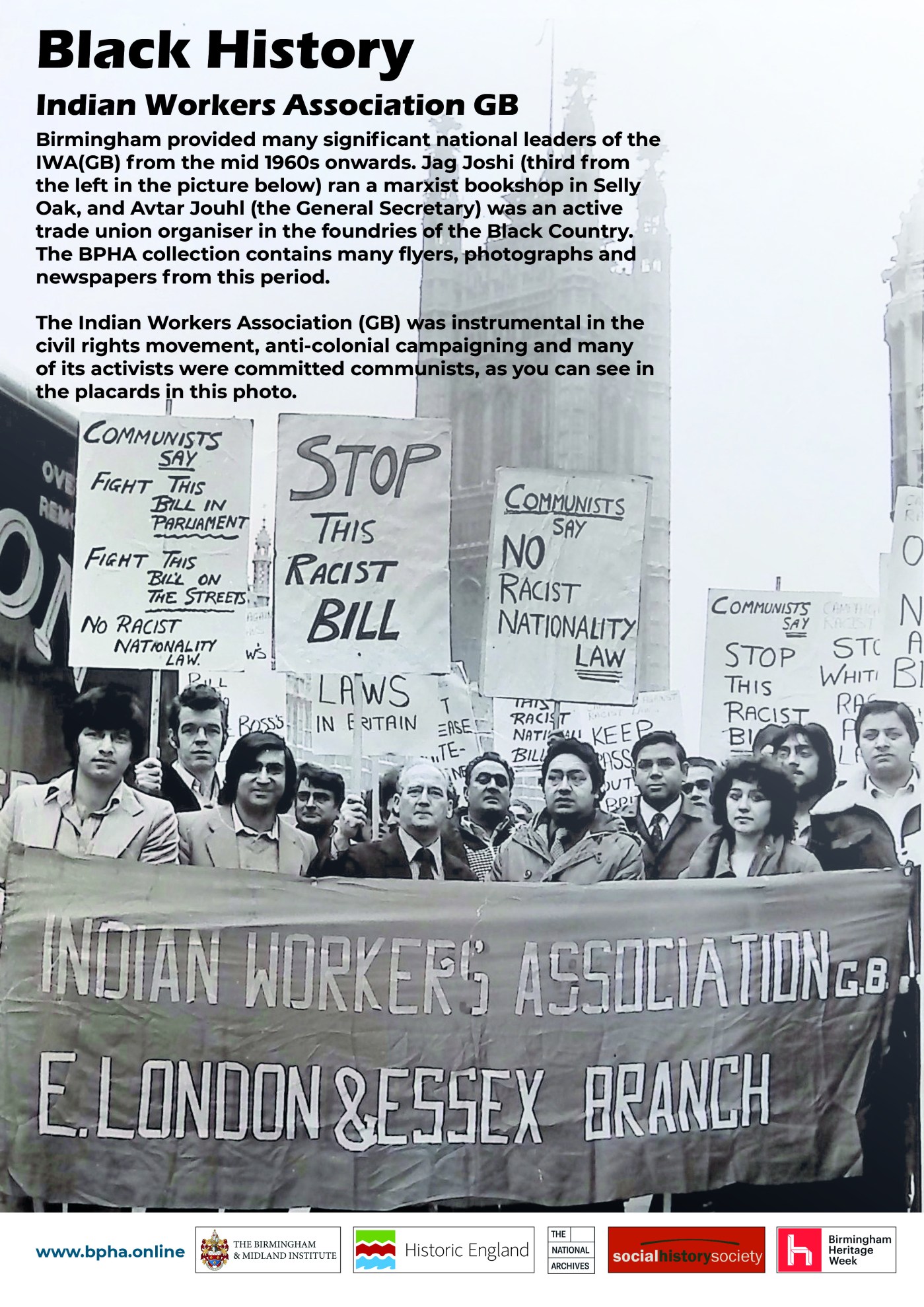



This October marked one year since the death of Avtar Jouhl, a prolific anti-racism campaigner and highly regarded General Secretary and National Organiser of the Indian Workers Association (GB).
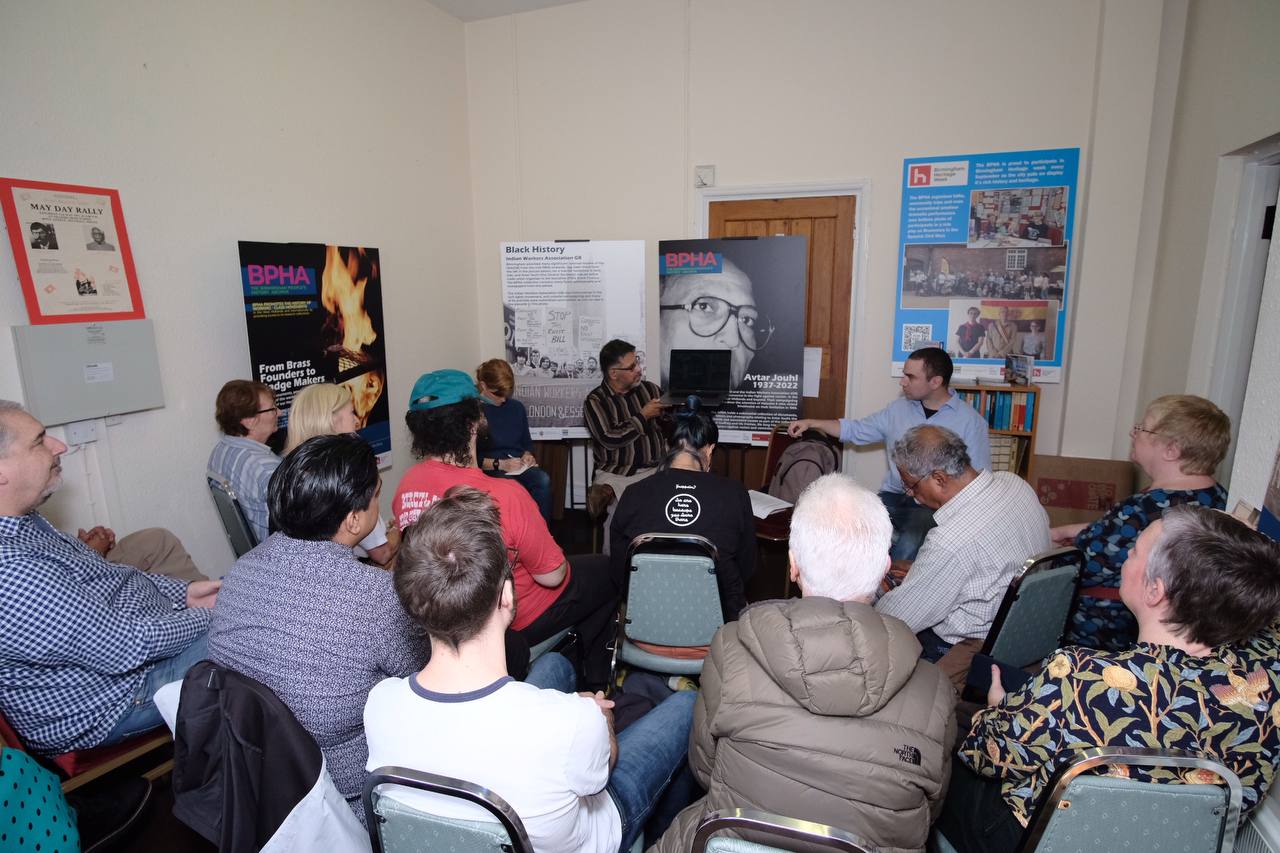
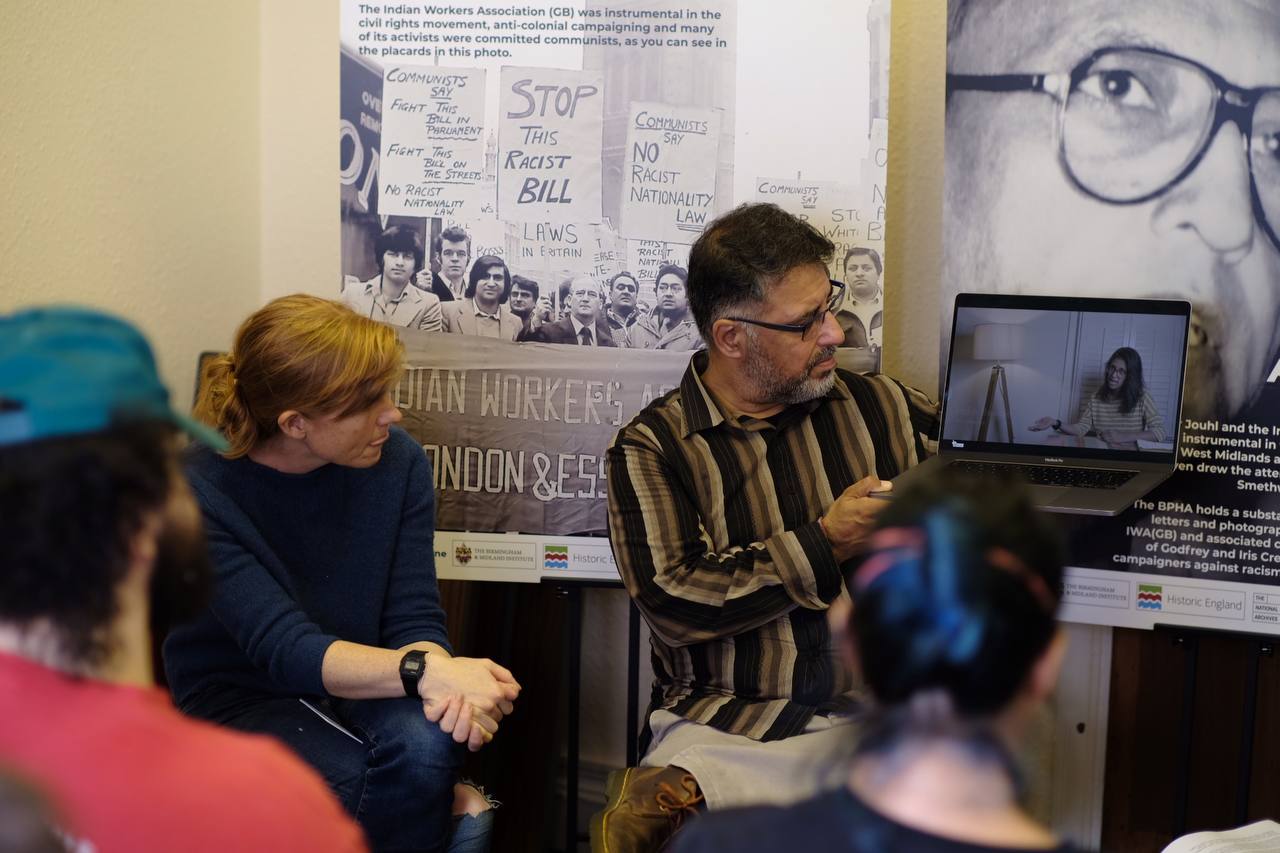
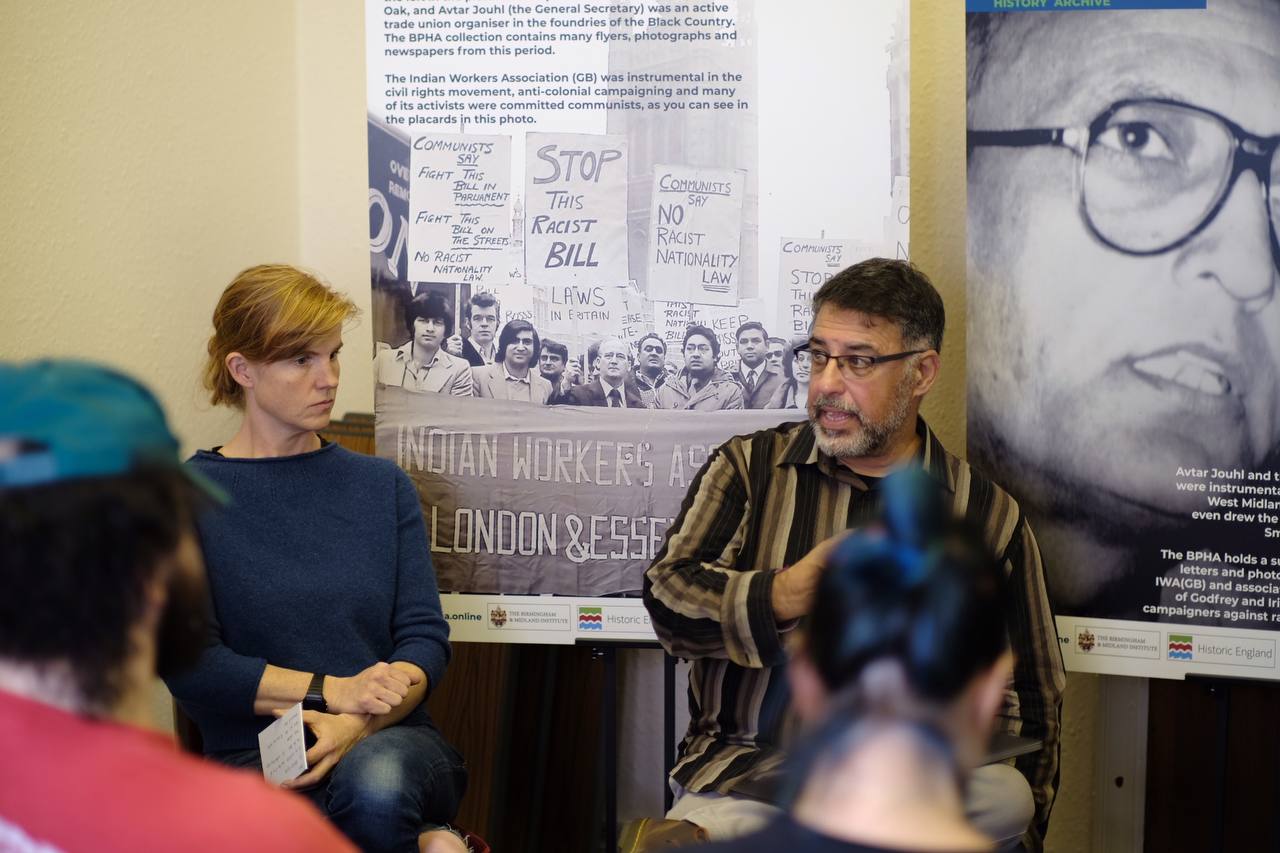
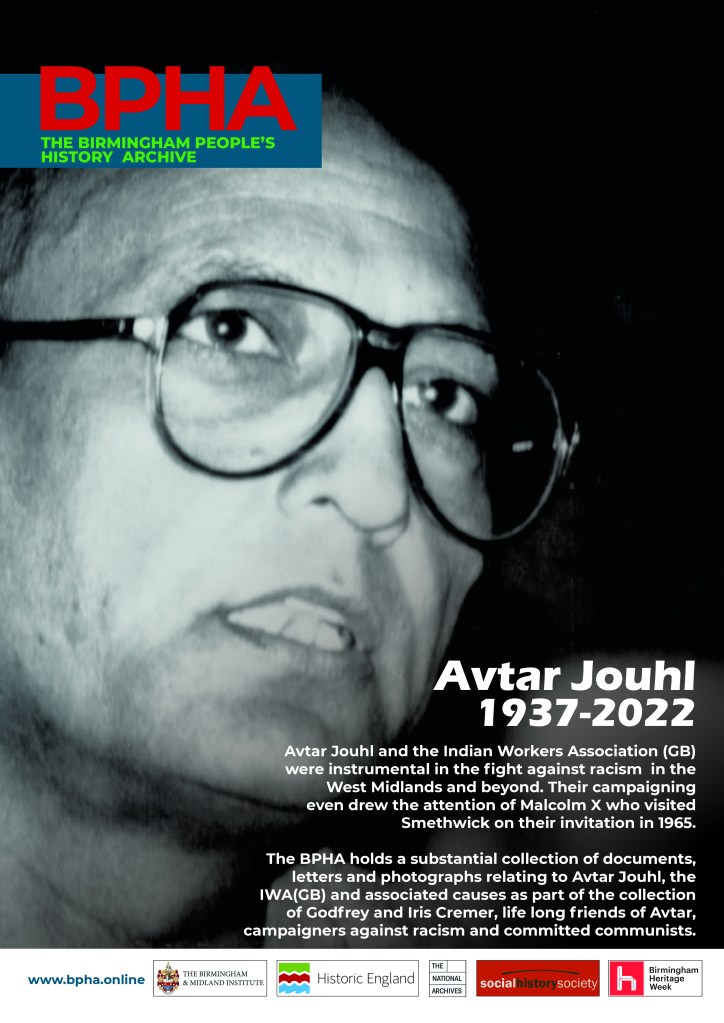
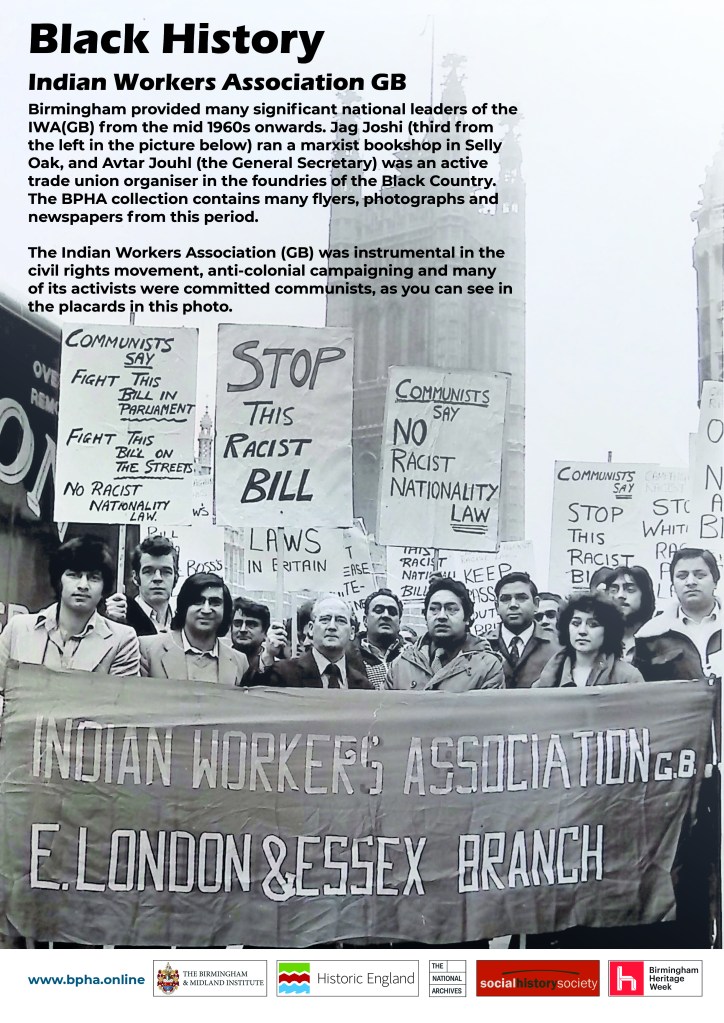
The Birmingham People’s History Archive, in conjunction with the Social History Society and BRiG collaborated on a celebratory event which featured a video presentation, talks from BPHA Director Katherine Cremer and BRiG Director Jag Johal on the life of Avtar Jouhl, with plenty of audience participation. The event brought together academics, activists, historians and researchers, many of whom were excited to discover the archive and learn more about the history of Avtar and the IWA. The meeting also displayed a number of new information boards showcasing important aspects of the history of Avtar, the IWA(GB) and the collection held here at the BPHA.
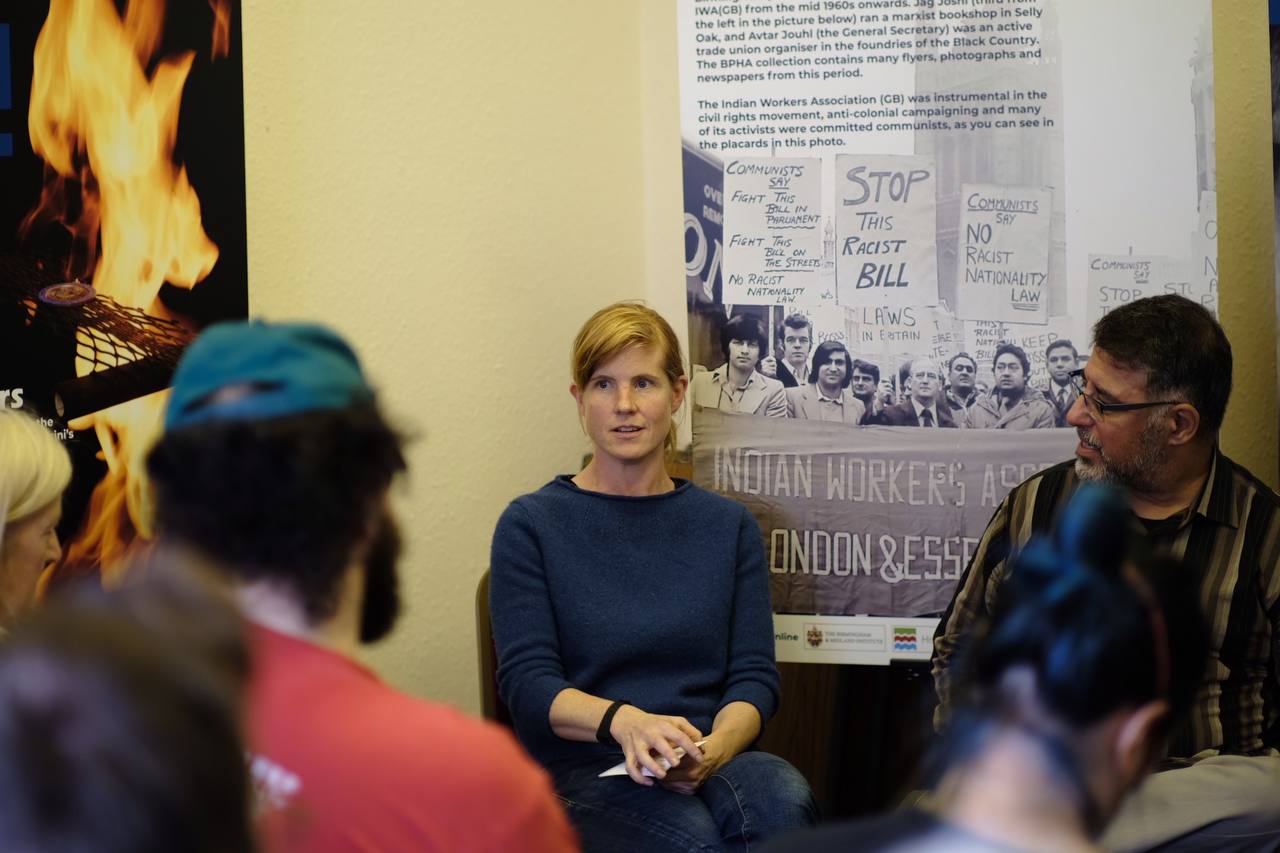
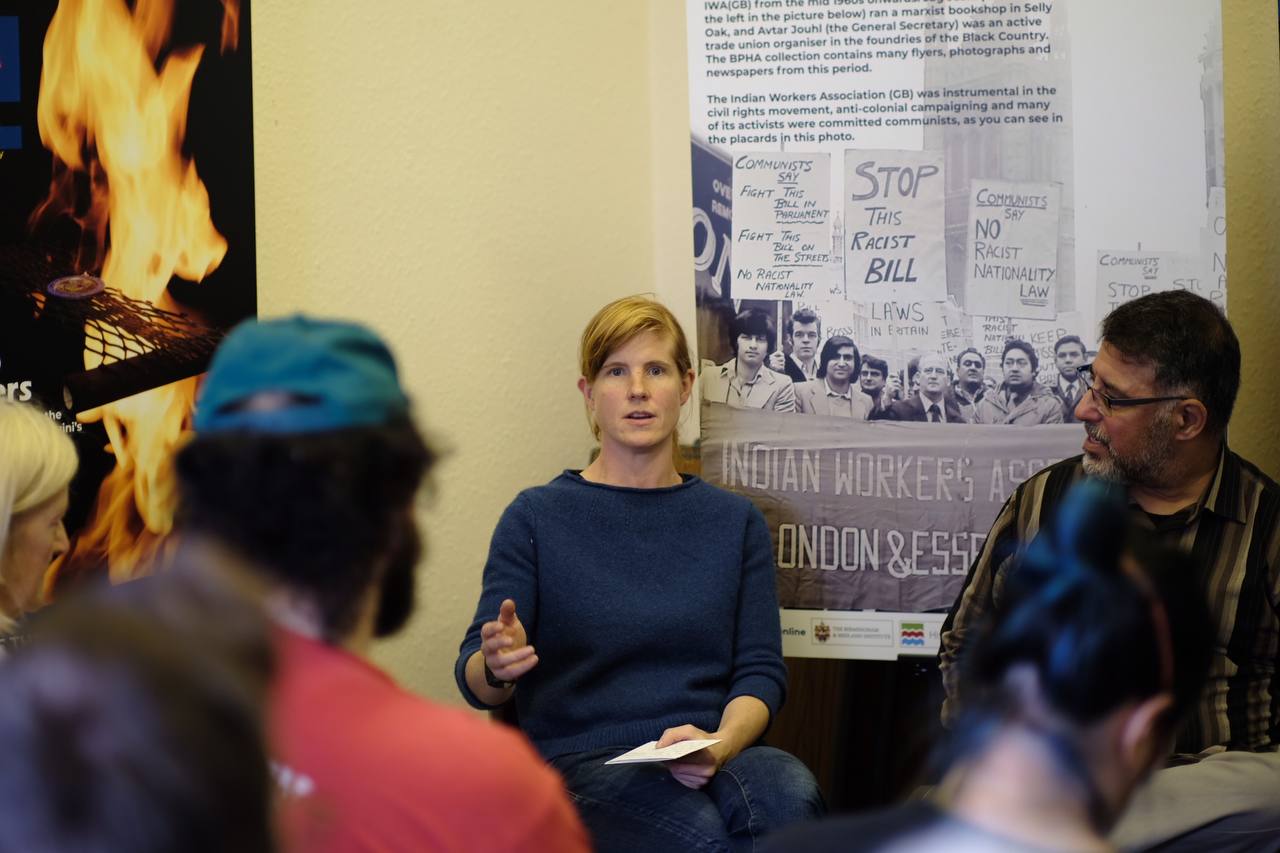
Our Director and a founder of the BPHA Katherine Cremer spoke about the culture of the IWA(GB) in the 1980’s and early 1990’s, about the central role of Avtar and his friendship with her family. Katherine was was joined by Jag Johal, Avtar’s son and today a leading campaigner in Birmingham against racism and discrimination, remembering Avtar and the important work undertaken by the IWA(GB). From the 1960s up until his death, Avtar Jouhl ensured that the IWA was at the forefront of anti-racism campaigns as they continued to challenge trade union members, factory owners, and publicans. It was this campaign that attracted the US civil-rights leader, Malcolm X to Smethwick, bringing much needed attention to the struggle. This undoubtedly aided in the eventual outlawing of the colour bar in the town’s pubs in the Race Relations Act of 1965, paving the way for Britons of Indian heritage to become publicans themselves. Avtar Jouhl is considered one of the giants of the IWA and in the words of his son, Jagwant Jouhl, “in honouring his legacy we need to progress matters going forward and build on those legacies that our forefathers achieved”. A full recording of the event is being prepared and will be made available on our website and youtube, visit www.bpha.online. The BPHA wishes to formally thank the Social History Society for all its support in making this event happen.
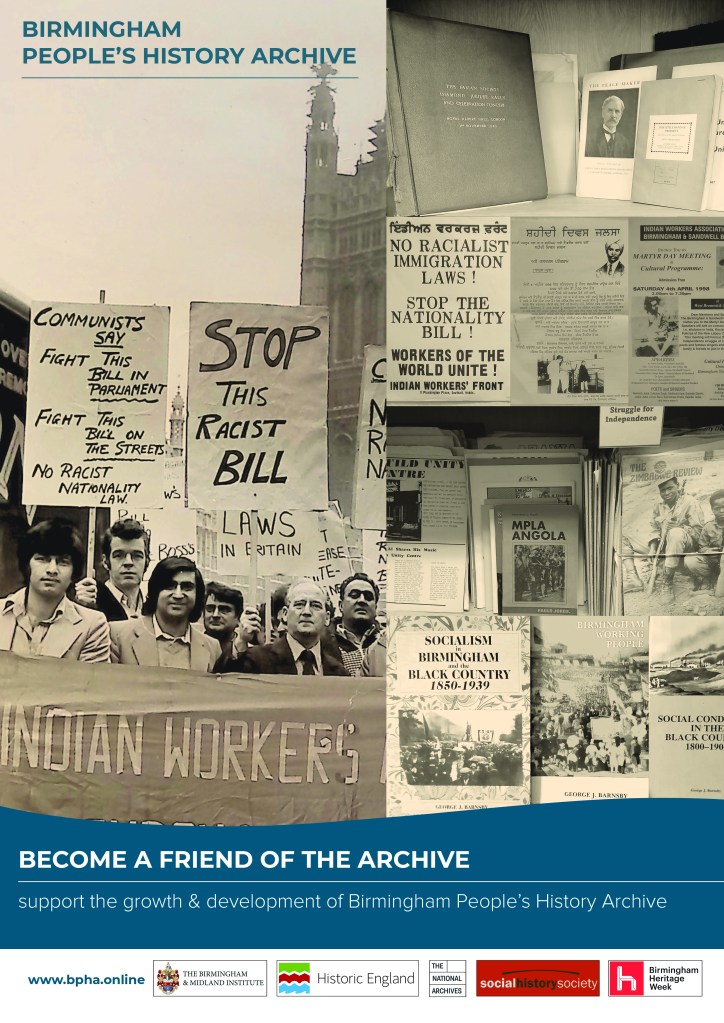
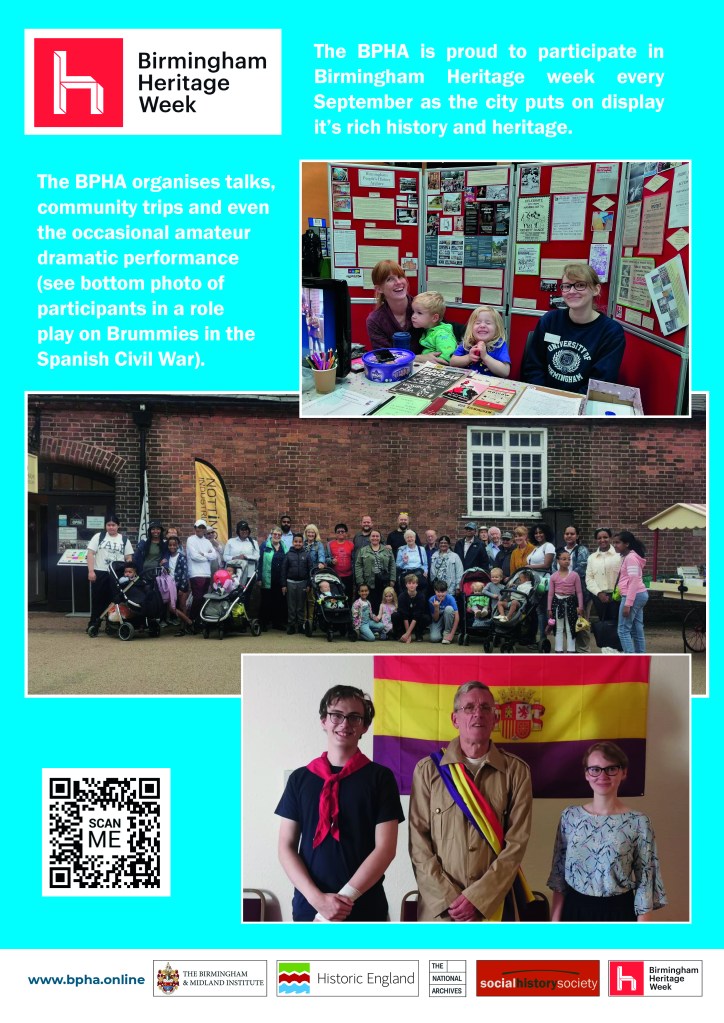
Some of the exhibition on display at the BPHA

 Birmingham People's History Archive
Leave a comment