
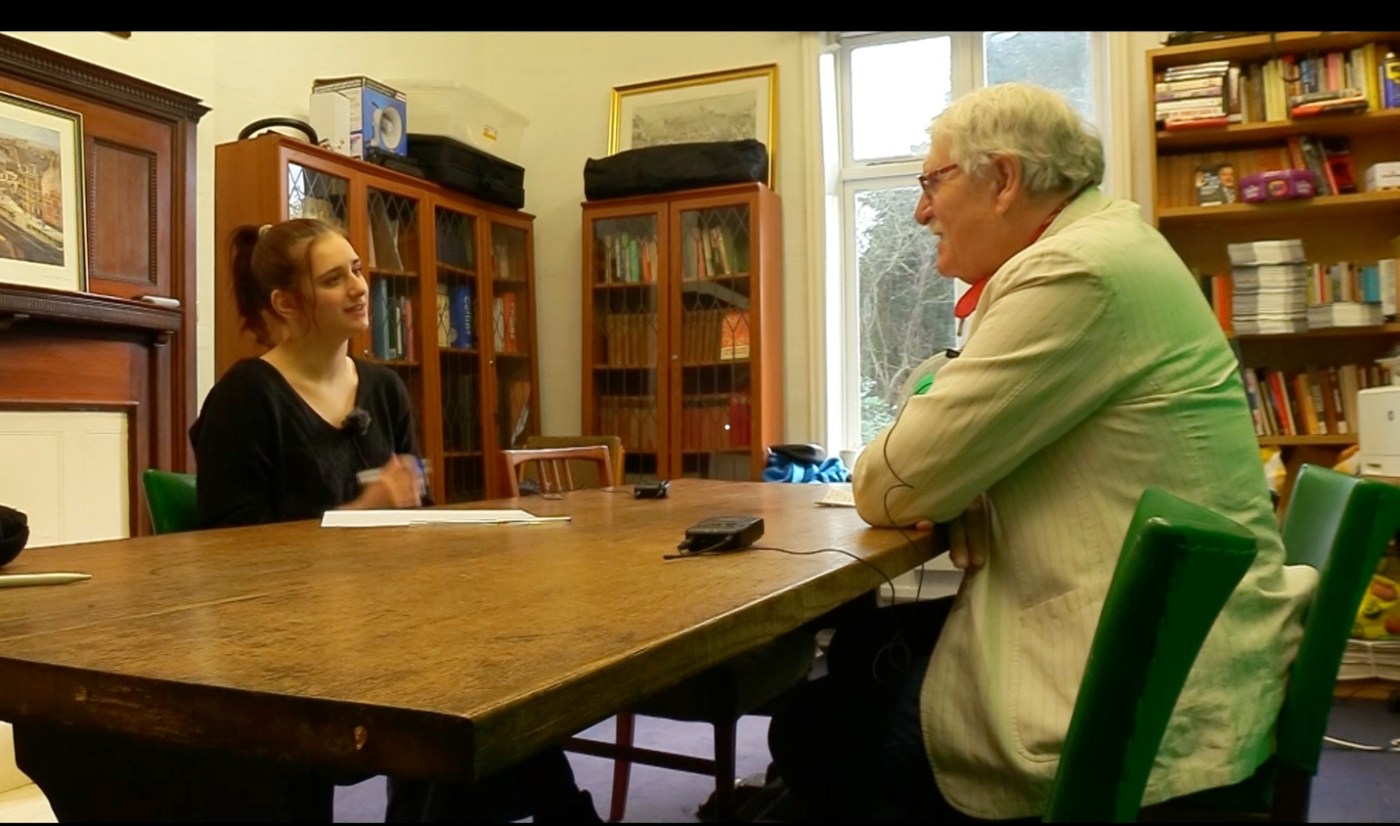
The following interview was conducted by Charlotte Langrish on 27 January 2023, as part of the BPHA’s Historic England oral histories project. Transcribed by Poppy Griffiths.
If you are a retired worker in the West Midlands who would like to tell your story, or if you know someone with a story to tell, get in touch with us at gill@bpha.online.
CL: Hi, I’m Charlotte Langrish and I’m interviewing John Hazleton, I’ve got a lot of John’s time.
JH: Just call me John, yes.
CL: So, I would like to start with your early life, if that’s okay. So, could you tell me just about where you grew up?
JH: Perry Bar, Perry Bar, Great Bar. The folks bought a house on Lavendon Road which backed on to Perry Hall playing fields. I was born there, well, I lived there from 1946 right until 1970 when I got married. It was yea, Bog Standard Semi, I suppose you call it now. Folks bought it when it was new in 38 when they got married. And then I stopped round that area obviously until I got married, you know, in ‘70. Went to the local school there. My sister was born in 1940 and she went to the local school as well and she, I think she got married in ’62, so she left the area then. It was just a Birmingham suburb, that was all. There were sort of similar sort of houses around the area. Local Methodist Church up the road, Park at the back where we always used to go and play out there, especially during the summer holidays. Canal, used to go and play out there and it got messy on there, you know, but as little boys do, you know.
CL: And what did your parents do before Lavendon?
JH: Me dad was an engineer, well I suppose it would be considered engineer now. At the carriage works, he worked there throughout the war. He worked at the Austin as well during the 30s. And then my mum, because she had the sister and then she had me, she basically stopped at home most of the time. I think she worked part time during the early 50s or the mid-50s, but then she packed up around about sort of ’57, ’58.
CL: And did you know what you wanted to do as a career when you were that young?
JH: No idea. No idea, no aspirations though. But Dad, I mean, I should have done really because Dad had the opportunity to go to grammar school but his folks could afford it so he didn’t go unfortunately. I mean it was a bit of a boom because it helped me out with my homework at the time, you know. And he did several little things which I didn’t know about, and he sort of informed me. He was very good on that aspect. But aspirations no.
CL: What sort of subjects did you enjoy?
JH: I enjoyed history and geography. English was okay. Maths, I suppose I scraped through on that one. I was okay at that, you know. But I do remember we had a history teacher there. And what really got me interested in history in any case was he drew a drawing of the Tutankhamun funeral mask on the board in chalk. And I thought it was absolutely incredible that was. And that really started me off like in history. And also, fortunately in I think it was about ’58, ’59, we had a local library opened up which we used to go up there. My father used to read a lot. And I was up there most weeks getting books out and reading and then taking them back in. So, it was a very good sort of opportunity to broaden your mind really.
CL: Did you do any subjects at school that helped you with your future career?
JH: I was quite good at woodwork, and we didn’t do metalwork because the school I went to, it had only newly opened. ’58. They got the workshop facility there, but they hadn’t got the teacher there so all we did was woodwork. I was interested in that. I mean I was quite good with hands. I made several things. I’ve still got a lot of things that now at home which I still kept; you know.
CLSo what was your first job?
JH: It was a silversmith, well trainee silversmith at Bishton’s in Regent Place.
CL: Would you be able to spell that for me?
JH: What, Bishton’s? B-I-S-H-T-O-N-S.
CL: And what year was that?
JH: 19, oh July, no probably early August 1962. I looked at the history of it not long after I started there and it was an established for, I think Thomas Bishton owned it originally back in the late 19th, early 20th century. I think it was sold on then, I think it was it, Roger Westwood, he bought it. They got it when I worked there. And I don’t know what happened to it. I went back probably during the 90s, early 2000s, it was still standing then. Then I went back about two years or three years ago. It had disappeared as a car park.
CL: So how old were you, sorry, when you started working here roughly?
JH: When what?
CL: How old were you when you started working here, roughly?
JH: Could you repeat the question again?
CL: How old were you when you started working at Bishton’s?
JH: I was 15 going on 16.
CL: Right. And was this considered quite young to have a…
JH: No, that was usual, that was. I mean, some… when I was at school, they did stop it. But I think up till about 1960, if in your 15th year, whatever time that happened in the academic year, you could leave at Christmas time, but that stopped. I did know one or two people who did leave at Christmas time. So, they were sort of 14 going on 15. And it wasn’t until sort of after I left school that the school age was up to 16. I could have left at fifth. I probably could have left at Christmas time, but I stopped on until the July.
CL: So, when you started working here, you were still juggling school as well?
JH: No, no, no. I was… That was full time, yeah. Virtually, I left on the Friday from school or the Wednesday, I think it was, because it depended what day of the week and the school we broke. I had two or three days off and then into work then. That was a bit of a shocker, you know?
CL: And so, for the record, could you tell me a bit about what Bishton’s was? What were you doing there?
JH: They made… They did do some silver stuff, but most of the stuff they used to make there was an EPNS, which is electroplated silver. So, it was nickel silver with a silver plating on it.
CL Right.
JH: Oh, well, all that other stuff. Christening cups, egg cups. They did do a few tea sets there and they did silver egg cups. I can’t… I didn’t do any silver cases. Very small wares, really, I suppose, really, which they did do. Most of it was, as I say, sort of EPNS stuff. And then, they odd silver, cream jugs they used to do, egg cups. That’s the only thing that sticks in my mind that they used to make there.
CL: Did you have to interview for this job?
JH: Yeah, yeah. I think through the youth employment, I think they looked down your records and think, you know, not an office person.
CL: Did you get any… How much training did you get for the job?
JH: Well, I think… I’m not going to remember it now, but I think I was sort of expected to stay there a few years, I suppose, really. But as I said, we were talking earlier on, if you’re at the larger companies, you probably would have been indentured silversmith, you see. So, you would have sat there for the five years. I did leave eventually, I think I was 17, going on 18, I think I did leave eventually. But it was an old Victorian building. It was a bit grim.
CL: What was it like working there?
JH: The rats there, oh gosh, you know, tea and sugar. Especially the sugar was they had to keep it in a tin, and up on a shelf, you know, because they would disappear.
CL: Right. And can I ask, do you remember how big it was?
JH: I dare say the room that I worked in, not quite as big of this room. So, I’d probably say up to those filing cabinets there. Then there’s the same size the other side and there’s a partition along there. That’s where the polishes worked. And I worked in these sort of what they call a making up area.
CL: Did you enjoy it?
JH: Most of the time, yes. Yeah. The wintertime was a bit of a devil, though, because it’s so cold in there, there’s no central heating. So, I used to put the gases on, the gas torches that we used to do the soldering with and to get it warm. The opposite was during the summer time, it was so hard if you have a decent summer, you know, because there’s, we had a few little windows. There were like really dickensian windows. I think about one to four. But probably had a dozen glass pines about sort of eight or nine inches square. But I mean, just two ventilators on those and that was it. You could vent those and that was it. And then the rest of the building, the back of it, they used to do the plating in there. That was an old section that probably dates back to the sort of early, late 19th century. When it first opened up, as were most of the other buildings around the area as well, there was some sort of age to that as well. And just up the road from where I did work was Deakin and Francis. And I think there’s a section there somebody told me that that was sort of dated back probably to the 1830s, 1840s. I mean, there were sort of some buildings that were quite modern, early 20th century, mid-20th century. But a lot of them were sort of, there were old, terraced houses which were occupied, but they turned into small little workshops, mainly for jewellers, that’s where they were there. But the larger buildings, they were mainly all the silvers, most in places.
CL: And so, was this sort of right in the jewellery quarter?
JH: Oh yeah, yeah. I asked a bit of you, you walked up Regent Place, turned right to the top, Victoria Street and then right again and you were right there by the Chamberlain Clock because you went past the school of silversmiths and jewellery, which I went to, because you had day release up there you see, as does most of the apprentices, if I know all the others, to train these in the quarters that used to go up there. Because a day, I think it was two days, two half days and a night class used to go up there.
CL: What were the sort of things you would learn?
JH: Basically, really the trade skills, how to raise a flat piece of metal into a bowl shape or a jug shape, to do seaming, you’d turn a piece of metal around, you’d seam it down and solder it and then you’d shape that into something else, which you wanted to sort of, you know, maybe push the corner, the bottom in, the top in as well or flare that out. Making cigarette boxes used to make those as well. So how to score them, so then again you have a flat piece of metal, you’d score it, the two corners, well the four corners would be dropped out, then you’d fold those up, solder that. And then sometimes you’d make the lid out of the same, you’d make the size a little bit higher, put the top onto it and then you’d saw that off. So, you’d lift on and off. Just the ordinary trade skills, which we’ve been going for centuries really within the jewellery quarter. Also, within the college there was sort of a section for the jewellers, horology and, I don’t know, I did Gemmology there, I can’t remember, which, you know, quite a few pupils there, well students there, where there was, I suppose we weren’t in the nucleus of the place at all. But a lot of students there who sort of came there and some of them did go off and probably built make or do their own sort of stuff, become designers. But it was a joke there that some of the older students there always went away, went to the Royal College of Art and came back as tutors you see. I remember seeing one or two there who’d taught me earlier on there were other students there. When I first went there in ’62, I think about ’65 or ’66, they’d come back again as lecturers there. But it eventually, it’s still open now but they extended it a lot. I mean it was, I think the original building, I think it was designed and built probably in the early 20th century or during the 20s, I think. A bit of art deco, I mean I think it was. So, it’s quite a nice building there.
CL: What was the social aspect like there? Did you have a lot of friends?
JH: I did, yes. It was very funny because well not funny, there wasn’t a distinct difference between the full-time students and us. The part-timers used to come in sort of the two and a half days a week. And we never mixed really because we were just the, yeah, the hoi polloi. There were some really snotty nosed people there which we didn’t take any notice of at all. But some of the lecturers there, they were very good because they could see, right well if you’re going to stop in the trade, we might as well teach you. And there were a number there were very good. And oh Mr Penny, I think the guy’s name was, he was splendid he was, really was, very good.
CL So where did you end up going after you left?
JH: I left there and where did I go to next? Fields I went to, Frederick Fields, that was on Hunters Road.
CL: You say fields?
JH: Fields, yeah.
CL: And could you tell me a bit about this?
JH: I think at that time also because if you went to one particular maybe they specialised in a certain, well two or three lines, let’s say egg cups, small tea sets and small wares. Well, if you went somewhere else, Frederick Fields, they used to specialise in cigarette cases because everybody smoked then you see. Or cigarette cases, cigarette boxes. And that’s how I did make cigarette boxes out of nickel and out of silver as well. And that’s how you sort of, you became sort of a journeyman, say you went to another place if they did something else, slightly different. But you’d also be able to say, oh I can also do that you see; you see. So, it led to going a bit more way to you possibly get a job there, you see.
CL: Do you think, did you have a lot of opportunity for progression if you stayed at one place or if you wanted to progress would you kind of move?
JH: Not really, it was a very small company. And if probably like Barters or maybe Eliss’, you might have been able to perhaps, maybe up to a foreman level perhaps probably. But the smaller ones, no, not generally.
CL: So, do you think it’s fair to say that people would move between different factors quite a lot?
JH: Oh yes, quite a few did, yeah. They moved around, you know, within the quarter itself, you know, the companies there which were sort of in operation then. Because I mean, I think the guy I worked in, he was, oh I must have been in his early 60s, I think. But I left before he retired but who they replaced me with it, I’ve no idea, you see. So, I mean, they would replace me with somebody because that was only one person. Because it was only him, he was in charge of himself, you see. It wouldn’t be so. So, Barkers, maybe you’d have had a shop for maybe 10, 15 people working in the shop, in the foreman obviously he would be over or supervising them. So, it just depends where you went to really.
CL: Well, if you don’t mind me asking, sort of when you were looking at jobs and choosing where to go to next, did you feel like you had much of a personal choice or did you just sort of go where there was an opening?
JH: Well, that was through a friend you see, because somebody I met at the college you see. I said I’ll be fed up with it. He said oh, come down to where I work, you see. I’ll have a word, you see. So, we did, and I went off down there. And the same again because the following job after that, I went to British Silverware which made a whole range of stuff. They did a lot of work for Mapping and Webb, and it was basically a Sheffield company who bought out Adi Brothers, which had been going for years in Birmingham. But they moved out of the Adi Brothers building into a larger building. And we were all on one floor which is much better instead of going up and down the stairs and this and that and the other. And that one, I did learn a lot there because I learned how to make tea sets, silver ones. In fact, most of the stuff at that place was all silver, very very little, candlesticks, candelabra. I did make some cigarette boxes there as well. But it’s fascinating watching the guys, once you made them, when it was polished and everything, and they put all the lining into it. Oh, that was a skill in itself, that was in any case. But that was probably one of the best places I worked at British Silverware.
CL: So, what years did you work there?
JH: Frederick Field, I didn’t write that in my notes.
CL: That’s all right.
JH: I was probably nearly 16, 17, Frederick Fields, I was 17, going on 18. I probably stopped there maybe 18 months, two years maybe. So, I was close to 20 when I was at British Silverware. They closed down unfortunately because I think there was a slump then, so everything just went down the hill. I think I went to another place, not in the quarter itself, outside the quarter. That again was through somebody I’d met at the jewellery college for the Silversmithing.
CL: And you said sorry that that field shut down, did you say?
JH: No, British Silverware did. When Frederick Fields did, some companies had a jewellery section where they used to sell, you know, make rings and jewellery. They were setting diamonds and various other stones, precious stones, into the rings. But then the Silversmithing part was upstairs in the house, it was an old Georgian house, I think that was used for that.
CL: I want to ask, when you were making products as small as a cigarette case, did you personally see your products through start to finish?
JH: Oh yeah, well except the lining and stuff like that. As I said, what I described before, you’d mark out the silver sheet, you’d score it, then you’d wire it up and then solder it. You’d run the solder down into the seams to make sure it held together. And then you’d mark off where the lid needed to come off and then you’d cut the lid off. That one became the lid, was the top really when you made it. Because the bottom part was open, so what they did, they pushed the, I think it was cedar wood they used to use, the base in it. So, there’s about, oh, about a quarter, half an inch rim all the way around that, so it just held on to that and the sides. Then you made the top, and then sometimes if they wanted a dome lid, you’d hammer that slightly just to shape it up. And then you’d cut that off, then you’d put two bars at the back which you’d set in the joints then, which was tricky because sometimes they’d solder together. Once you’ve done that, and all, yeah, that was fine, and then you’d burnish it the sides, just if they’d sort of bowed out or anything else, you’d burnish that and get that nice and square. That would then go onto somebody else in another process. They’d strip it, which is getting all the fire out of the silver because when you get a silver hot, if you polish it, you get a slightly bluey tinge to it. Well, it’s almost like plating in reverse really. They drag that out, so you lose microns of the silver. But then when it’s polished, it really does shine. You get a really deep shine to it, and then from that, it goes onto the polishers.
CL: How many do you think you would make a day?
JH: Oh gosh. You could… I forget now, how many I used to make. Such a long time ago.
CL: That’s okay.
JH: I could probably do, I don’t know, maybe ten probably, or probably around about ten possibly. Or maybe about to score ten up and maybe fold them and maybe solder them up.
CL: Did you get paid sort of on commission of how many you made or was it hourly?
JH: No, just a standard wage, that was all, yeah. Some places I’ve worked at, they were piecework, but I think most of the time it was just day worker then they called it then. So you just got a standard wage. My first wage package right from Bishton’s was £2.30 and a tuppence.
CL: Thank you. I want to ask now a little bit more about your social life, because you say you’ve got quite a few jobs through friends.
JH: Oh yes, so that, yeah.
CL: But sort of, people that worked in the Jewellery Quarter, did you tend to know quite a few people from quite a lot of places?
JH: Well, basically from the college, all the silvers we had, the trainee silvers who came up there from the various other companies around the quarter, you get to know them because you chat to them, and we’d put the cafe at break time. And then, I don’t think we ever went out for a drink together, I’m sure we didn’t, we were probably too young then in any case. But you get to know the people and we kept in contact with each other. And then if you wanted anything or sometimes you saw them, oh, any job’s going, you know, you’d ask them if there was. And they’d say, yes, I might come along. So, it’s sort of, I still know some of them now, but I don’t know where they are. I’ve no idea. Roger Parker is one I did know quite well because I joined the union then and he was quite strong in that. So, as I was as well, I joined that. Quite a few people joined it as well. And you get other contacts through that as well.
CL: So, the union. So, which year did you join? Sorry, a lot of years.
JH: Something of the places, Frederick Fields. It was probably at British Silverware. I’m sure it was because George Dyson, he was in it. National Union of Gold, Silver and Allied trades, I think it was called NUGSAT, I think we used to call it.
CL: And what encouraged you to?
JH: Well, because my dad, he was strong in the unions, any case, going back to the 30s. And all the way through. He was also the secretary of where we used to live, the local Labour Party, you see. And I was out there pushing leaflets through the doors at about nine or ten or something.
CL: How big was this union?
JH: Oh, not very big. Not many people. Because it was, I think because of the history in Birmingham, because a lot of the companies were just one-man bands. It really wasn’t worth it because they were shooting themselves in the foot really in some respects. So, you say that you were important to them, buying it, joining the union. But the silversmithing companies, you know, British Silverware, Barkers, they employed quite a few. And it was worth, if you’re in the union, to join it. More, you know, collectively really. So, you had more sort of possibilities of getting a better wage increase.
CL: So, of course, like you just said, a better wage. What else were you campaigning for?
JH: That wage conditions, hours, because when I first started working, I’ve written it down, I did 47 and a half hours a week, you see. That was ‘62. And by the time I did finish in ’90, I think it was down to, it’s probably 40, or maybe even 38 hours, I think it was, a week. But that was 47 and a half hours, always a killer that was. You come out from school, you’re all bright and then you sort of go into that. Maybe you got out at the same time, but it was sort of the fact that over two hours, adding on at the end of the day, oh yeah. First sort of six months, it really was hard going. And once you get into it, you know, you accept it really. That came down in little bits, but it was hard for what I think really.
CL: And how did that affect you mentally?
JH: It restricted, I suppose, a little bit your social life, I suppose, really, but not a great deal. Usually Saturday and Sunday was, well, Saturday, Friday, Saturday was a night if you went out anywhere. We might chance a night out during the week time. But if you got to, well, I used to get up, I think it was about six, quarter to seven times, I suppose. I didn’t drive, so I used to bus into work, you see. Whereas the traffic probably wasn’t as bad as it is nowadays. You’ve still gotta be down there at the bus stop catching the bus, you see, at a particular time. Because most of the, well, Bishton’s I didn’t clock in, Fields I didn’t clock in, but I think they kept an eye on what time you arrived and British Silverware, you know, you clocked in there.
CL: So, is it right that you went to Bishton’s, then Fields, and then to British Silverware?
JH: Yeah, yeah.
CL: Right, and what was working at British Silverware?
BJH: Oh, that was lovely there, because there’s a big shop there, and it was a long, probably, maybe 100 metres long, I suppose, really. All benches down to one side, all windows down that, so it’s quite light in there. And at the back, there’s sections, at the back where all the benches were, where you did all your handwork, at the back of those, that’s where all the soldering areas were, and all the gas lamps were along there, where the torches were. And then, to the further back of that, there’s the little Irish guy who used to do all the stripping with the silver, and then there’s another guy used to do the engine turning in another part section, and then there were a couple of doors into the polishing area, where all the polishers were, and the finishers, they were there in that section there.
CL: Were your conditions and pay and hours better?
JH: That was better there. Bishton’s and Field’s, it was a bit grim, that’s all, you know. Bishton’s, I went there, and then I got all written down here, you know, health and safety were just non-existent. Because I used to have to, because if soldered something with nickel silver, then you’d need to use a flux which would harden onto the metal. That needed to go into a pickle, which is sort of sulphuric and water, and it’s one part sulphuric, ten parts water. It used to be heated up, it wasn’t boiling, it was just warm, and you used to get rid of all the gunge off the bits that you soldered, you’d say, the items that you soldered. And then, suddenly, you’d then put it into aqua fortis, which was really strong, that was. And after time, I’m doing this, you know, and I’d have holes in my trousers there, and that’s it, that’s so fun. I said, I’ve been doing some dipping today probably, and he said, right. Somebody did, unbeknownst to me.
CL: You didn’t get given any protective wear?
JH: Oh, no, no, you know, you learnt, just did it at a distance, really.
CL: Why do you think it, along your career, why do you think these conditions got better? Do you think it was time, or do you think it was because you were working at nicer places?
JH: It could have been time probably, and it could have been people saying, right, well, we’re not standing this any longer, you know, something needs to change. Although, up until, well, in 1970, when I was at, I went to Barker’s, because that was ’60, I don’t know, that was after British silverware. I think that was during the early ’70s, that was, I was there. Another John, we had to change the pickle, because it was, after time, it loses its bite. We were given the task of sort of clearing it out, refilling it again, but that time, we had big, long aprons on, you see, and rubber gloves, so it’s better. I can’t remember if we had goggles on, we might have done. So, things have changed in the sort of the eight years, I think.
CL: I’m really sorry for the sake of me and for the record. Could you tell me what a pickle is?
JH: Pickle. It’s a name which we gave to this, because you put the silver into there and also the nickelware into there. When you solder it, usually just the flux, which helps to run the solder round and join the two pieces together. That goes quite hard. Well, you need to get rid of that you see. Well, you put it in a pickle, what it does, because of the reaction of the acid on it. only very mild, obviously. Couldn’t put it in neat, because it would disappear, I think it would, the silver would. It just gets rid of that and clears all off, you see. And then you whop that into water and then just dry it off then.
CL: What did pickle consist of?
JH: One part sulfuric and ten parts water. So, it had got a bit of bite to it, but not enough to burn you. Only the neat sulfuric would do. But it was just every place had small vats. Some places had quite big ones.
CL: Did you or anyone that you knew ever get injured?
JH: Not as I know of. I ruined some shoes when I was at Barker’s because, I don’t know how we did it I’ve no idea, but we splashed on the sulfuric, so I had ruined my reasonable pair of shoes, I had holes on holes, you see. I claimed for them, I did get the money back for it. But that’s the only one. Polishers had more problems than we did, because obviously they’re working on a wheel which is rotating around quite fast. We could only just burn ourselves or perhaps just cook ourselves or nip ourselves, which sometimes is down to your own fault really, because you should realise it. Or if you don’t pick up hot stuff, you see.
CL: Your workplace, I know you worked in quite a few, but… Birmingham is known now for being quite a multi-cultural city. Was your workplace diverse at all?
JH: No. It was basically all white. Also, again, because there were no lady silversmiths. Jewellers, that was starting to change. There were quite a few students at the jewellery college doing jewellery. They were women. Whether they would go and, you know, form their own companies, probably they did do, some of them did. Some of them didn’t, you know, I don’t know. But majority of the workforce was white male. Occasionally… I can’t remember any ethnic minority working there at all. Not the time, because I finished altogether in 1991, I’d finished totally. So, I think even in that time, when I went to the place down, Aston Road North, I went there, there were a few… Maybe some of the polishers may have been sort of black. But not many of them. Yeah, it was basically just a white, sort of, no sort of Asians there at all.
CL: During your time working in the jewellery quarter, did you get married, have children?
JH: I got married in ’70, yes, when I was at Barker’s. And then didn’t have children until ‘80.
CL: How did you meet your wife?
JH: I used to go roller skating. It used to be an ice-skating rink, but they converted it during the mid-60s into a roller rink. And it was quite popular. I mean, there weren’t many places really that you could go to. And that was… it was just a nice bit of exercise at the same time. And there were loads and loads of young people there. I used to go probably two, three times a week there. But that really was good fun, yeah.
CL: Where was that? Sorry.
JH: Summerhill. Just up from the Oh, there’s a beautiful red terracotta library there. It’s just up the road there. I think it’s been demolished now, unfortunately. It’s not there anymore. I think the ice rink started probably just after the Second World War; I think. Because I went there once. I think a friend of my sister’s, she was into ice skating, so I think I went along there. And that was probably the late ’50s.
CL: So, did you manage to have quite a good work-life balance?
JH: Yeah, yeah. I didn’t go out drinking a lot in any case. Basically, I didn’t get the money. I suppose, but the clubs weren’t there. There was Le Metro, which is underneath the arches, down Livery Street, which was quite nice. They used to play jazz down there. There were one or two nightclubs as well, up on Broad Street. Cinema, that was it, really, I suppose. Maybe just go down for a few beers of a Saturday night. And the Tower Ballroom, you know, good dance up there. Oh, it’s fine. It’s just now gone, I think, unfortunately.
CL: I’m now going to ask a bit about coming into the ’80s, is when sort of a lot of factories started to close down. Going into the 1980s, a lot of factories sort of started to close down around that point.
JH: Yeah, they did, yeah. I think that was because the price of silver rocketed. I think it went up to, oh, gosh, £18, £20 an ounce. I think it was a troy ounce. Whereas before, you know, it was knocking around, or £2.50, £3.50 a troy ounce. And it just knocked the bottom out of the trade, out of the core. Especially, I think it was ‘83, I think that was. And I think a lot of companies, they just cut back. But they couldn’t sell silver stuff anymore. When I was working at the time then, what Bunny did, he just started making silver, couldn’t afford to buy it really. And people weren’t buying it. So, he did a lot of plated stuff, he finished stuff. But he got over it again, obviously, it sort of came up again. There was sort of, it was probably, the one-man bands really closed up, because they couldn’t afford to buy the silver, obviously. Whereas the larger companies, well, most of those were reduced as well at that particular time. But it was those that were able to the weather the storm. And whereas the more of the smaller companies, they just couldn’t afford to buy these, the materials.
CL: Did this complete rise in silver, did this affect you, personally?
JH: It did. I think, I think for a short time as well, for a short, for two or three months, the hours were cut back. But, yeah, he was quite good. I mean, he kept the company going, Bunny did. So, I didn’t have to sign on the dole at all. So, in that respect, I was sort of quite thankful for him, for doing that. Probably had two children then, you see, if that was, I really did need somewhere to work. And then, as I say now, it picked up again. Because all over all the years I worked in the trade, it was sort of peaks and troughs, really, how the economy was. It was down, obviously, the work decreased. But as soon as the economy picked up again, the sort of orders came in, and so it sorts of balanced itself out in some respects.
CL: I’m going to go back a little bit, chronologically. That’s okay. I was just thinking about what you said about being in a union. I’m wondering, did you or any of your friends partake in any strikes or disputes?
JH: There was one, I think we wanted, obviously, wage increase, I think. I think there’s a ballot, but I don’t think we got the required number on it, so it didn’t happen, unfortunately. But what the, was it the BJA, which is the Bergen Jewellery Association, I think it was, who was sort of the boss’s side of it. And our secretary used to sort of negotiate with them, with a committee of people as well, who would negotiate the wage increases or reduction in hours or sort of terms and conditions. Sometimes they’d give a little bit, but it was a bit of push and shove. We didn’t say, I wouldn’t say we sort of ruled the roost at all. It was, we knew what we wanted. We said that you compromised, and they compromised as well. We just rubbed along, really, I think. But as a strike, I think, now, I can’t remember us striking at all, because I don’t think, well, if we did, I think I don’t really got a majority for it at all. And also, because they always know probably, like there’s somebody else around the corner who might want the job as well you see. So, you was thinking about that aspect, are we? Well, are we going to win this or not? If we’re not, sometimes it’s pointless going out.
CL: Did you know quite a few people that were in unions, or were you quite an exception?
JH: No, no. Quite a few of the people I used to know work at Barkers, they were all in the union, most of them were in any case. British Silverware, I can’t remember there. Most were at Barkers, and then the other companies I’d worked at, most of the people there were in unions as well, were in the National Union of Silversmithing. But we used to go and rally sometimes, especially during the ’70s, kill the bill, all that stuff, when the Tories got in in 1970 and brought the sort of industrial relations act in. We took part in that as part of really just us, really, and many of the other unions within the Birmingham area, especially the Transport and General, who were majority of people used to work, of that union, and all the members of that union used to work out at the Austin, you see, and other trades. Oh, it’s another name. Maybe, I don’t know about Lucas’s, I’m not sure. But they were sort of quite strong in that respect, especially down at the Austin. I mean, they’ve come out in any case and support. The sort of, not like in the industrial relations act, as always, they’ve been marching around town, with the banners and whatnot. That was quite fun, that was.
CL: I’m sorry, I have to ask, you say kill the bill. Yeah. Could you please explain what that means?
JH: Well, in 1967, when the toys got in, when Ted Heath got in, it was the old story, really, that the union was too strong, you’ve got to stop them doing all this, that and the other. And it was Robert Carr, who bought in this act, well, it was a bill to reduce the union’s power, and he thought, well, it was really a bit of a con job, really. You could go on strike, but you had to follow up certain sort of procedures. You couldn’t do secondary picketing, a lot of that was sort of outlawed. And various other sort of actions as well within the bill when it did come out. And it was just curtailing what a lot of people said, well, it’s all right to be in the union, you can’t stop us being in the union. Unity is strength, sort of thing, really. But that sort of got a bit iffy, when the first miner’s strike in ’73 I think that was, when we had the three-day week. Which one? Do you remember the three-day week? Yeah, yeah. You had? That’s it, yeah, yeah, because I remember that one. Oh, my gosh. You met on the picket line. That one, oh, what’s his name now? Arthur Gormley. He wanted a pay rise for the miners, because he said, right, they work bloody hard, and he said, you know, they really need a pay rise. And whoever was the employment secretary then, I can’t remember who it was, but I’ve been Reggie Mauling, I’m not quite sure. And he said, no. And they all said no. And so they came out on strike, and what it meant, they worked, the power did come on, but there are only certain times during the week, so what you might do, you’d have, you might work one, perhaps two days a week, or maybe two and a half. But you, instead of working your normal eight hours, you’d work 12 hours. A day. For a day, yeah, yeah. And then you might have a day off, or it depends when the power’s on, because they’d tiddle it around, you see, so the power’s on in a certain area, in a certain city at a particular time. And if that power’s on, on that particular day, you went to work, you see. And then the other times, if it was off, I mean, you’d sit at home, candlelight, no television at all, you see.
CL: Did, how did this affect your pay? Did they still pay you like normal?
JH: Well, if you were able to get in the, to a required amount of hours, you were okay with it. Otherwise, you know, you’re obviously, your wages dropped down, slightly.
CL: And did you work on the weekends?
JH: Yes, I did, yeah. Yeah. Well, I forget what I was working then. But we used to work, I mean, it was sort of, six o’clock we used to get in, or seven o’clock. I think it was seven, or seven till seven, I think that we used to work. And that really was hard going, that was.
CL: Was that during the three-day week?
LH: That’s it, yeah, yeah, yeah.
CL: But in the sixties, the early sixties, people were working, Monday, Tuesday, Wednesday, Thursday, Friday, and Saturday morning.
JH: Oh, yes, some of them were, yeah, yeah. Oh, I forgot to mention that, yeah. Not necessarily in the Jewellery Quarter, I don’t think. Although, I haven’t worked on the Saturday morning, occasionally. But some of the older people there, during the fifties it was, you know, it was common, you know, you worked probably Saturday morning, up till sort of twelve-minute day. But when I first started, I don’t think it was a common practice, I think it was, really was starting to sort of ease off. But, yeah, it was, it was an exciting time.
LC: Well, I’d like to ask, from the sounds of it, correct me if I’m wrong, you worked in the Jewellery Quarter for all of your career.
JH: Virtually, yeah. Twenty, no, twenty-eight years, yeah.
CL: Was this very common, to stay sort of in the Jewellery Quarter?
JH: A lot of the time it was, yeah. Because, I’d say, if, I mean, Roger, Roger Parker, I’ve mentioned before, he worked at Barker’s. Since he was fifteen, I suppose, really, and I think that closed, oh, gosh, 80s, no, 90s, maybe 2000s, 90s I think that closed. As far as I know, he was there from all that time, I think. Or, maybe towards the end, he might have gone off and started work for himself. And I think a lot of the other guys worked there as well. They’d been there for years.
CL: Because it was very specialised work.
JH: Oh, yes, it was, yeah. You couldn’t walk anywhere else. Oh, no, you couldn’t just walk anywhere else, no, no. There’s a few places in London, but not many, not on, you know, the same size as really up in Birmingham. And probably Sheffield as well. Because the union, we had branches, we had members up in Sheffield and down in London. The London branches, they usually were manual jewellers. Whereas the Sheffield one was manual silversmiths.
CL: Before I begin to finish up, I’m wondering if there’s anything that, you know, we haven’t asked you that you’d like to talk about, maybe a good memory or anything you’ve particularly enjoyed.
JH: Ah, holidays, right?
CL: Go ahead.
JH: This was my sort of rundown of the holidays when I first started work in any case, this was ’62. You had ten days generally, that was the last week in July. Most holidays were fixed. Depends which company, Barker’s and the larger companies, maybe they were staggered. But most of them, that was it. So, it was the last week in July, first week in August. Two days at Christmas, no New Year’s holiday, that was it, you know. That was unheard of, you know. If you wanted to go out for a drink on New Year’s Eve, you did. But you had to be in work the following day, so you’d be working up to then. And with the Christmas as well, depends when it fell, you’d always work Christmas Eve, or up until probably until lunchtime, and then go and have a couple of beers and go home then, you see. So, let’s say it was a Friday, or Christmas Day as I say, on a Sunday probably. You’d pack up on the Friday and then you’d come back on the Tuesday, so you’d get an extra day. But most times it was just two days. Easter’s the same, and oh, depends on the company as well, sometimes you might have a good Friday off, if they were Catholics maybe. But if not…
LC: Right, thank you. Sue, do you have any questions you’d like to add?
SO: Can you talk about EPNS? Now that’s a really fascinating thing that it’s all gone now.
JH: Oh yeah, I love it, yeah. Electroplated nickel silver, yeah.
SO: Did you work near Elkingtons?
JH: Actually, that building still exists there at their initial place, on Great Hampton Street, yeah. It’s near the Red Blue Theatre. Yeah, along Great Hampton St, oh, the Orange Blue Theatre, along there. It’s just up the road from there, yeah, it’s a white sort of late 19th century industrial one. It’s a lovely building, next door.
SO: There’s a historian who has written a book about it, and he takes you on walks.
JH: Yeah, yeah.
SO: On a Monday, a Monday morning, oh, there’s a book about it, you’ll find it in Birmingham Museum.
JH: I’ll have to have a look at that, yeah, yeah.
SO: But he, this process of EPNS, because if you were not a well-off person, because we had it in our house.
JH: That’s what you bought, it’s like a poor man’s silver really, yeah, yeah, that’s it, yeah.
SO: You didn’t have silver, you had EPNS, which didn’t half wear away.
JH: Oh, it did, because you polished it, you would wear away.
SO: It was really, you inherited it off your grandma or somebody like that.
JH: It probably wore away then.
SO: But can you explain how it worked?
JHJ: Well, basically what it was, you got to the making process, the polishing process, and then once you’d got to the stage of plating.
SO: So, you had a piece of metal, was it solid silver?
JH: No.
SO: It was nickel.
JH: What it was, basically most of the stuff was made from nickel. I used to, at Bishton’s they used to do egg cups, as an example. Those are polished, and then up to to the finish stage, and then they would be viewed, like young ladies upstairs, and look at to see if there was any scratches and anything on it. And then that would be then plated. What it was, they put onto a jig, and that would be lowered into a vat. I can’t remember what was in the vat, whether it was acid or not, I really can’t remember. But then there’s a plate of silver on one side, and then the current, I think, went through the jig, and then into, from the silver onto the items, it would draw the silver off, you see, depending on the amount of time you left it in the vat. Yeah, it would take the silver off, the, the, the, the sheet of silver, and then lay itself onto the, onto the item, you see.
SO: It’s a fascinating…
JH: Yeah, it’s, I mean, in microns, you know, which is a very, very small amount. And, and then that would then be sort of what we call the finishing process, which would be very, on, on the polishing machines, they’d be very, very soft bobs, and they’d be polished, and then that was it then. So they’d be wrapped up and, and sent away and sold. But, I mean, there’s a lot of items were made. It probably, as I said, you know, poor man’s silver, if, used to do in the 50s and 60s, you’d see hotel, tea sets a lot of those were in nickel silver, but were plated. Vases, anything really which could be made in silver, was usually made in nickel, or in copper, and then plated.
SO: And with the silver on top?
JH: Yeah, with silver on the outside, yeah, yeah. I mean, even, even cutleryas well, that was plated as well at times, instead of being…
SO: Because you can taste it, can’t you? If you, if you… You could then,
JH: I don’t know. [Laughter]
SO: Metal in your mouth. Yes.
CL: Thank you so much for being here.
JH: That’s a pleasure, it’s a pleasure, thank you.
SO: So, you did have women working in your place, but they worked in a different part of the building.
JH: Oh yeah, yeah, that was it. They were… Total separation, yeah. The women did most of all the sort of the light work, yeah. The light work. Florie, she used to do the finishing for us when I was at Bishton’s. There were women, I think, at other places, right, used to do, but they only did, they didn’t do the heavy polishing, they did the light polishing. Well, you know, the finishing stage, so if they’re in the… If they’re doing silver, they would do all the guys who do all the sanding and the mopping, the heavy mopping, and then they would go to the finish stage and then they’d finish them and then, you know, we wrapped up and then out of the factory then. But it was, you know, here it was. Women worked in the office and blokes worked on the factory floor, you know. It really was division. It’s changed a little bit since then, I think.
CL: Okay, well…
JH: Happy days, yeah.
CL: Thank you so much, it’s been really interesting.
JH: That’s alright. Any time yeah.
CL: Thank you. Thank you.
 Birmingham People's History Archive
Leave a comment