
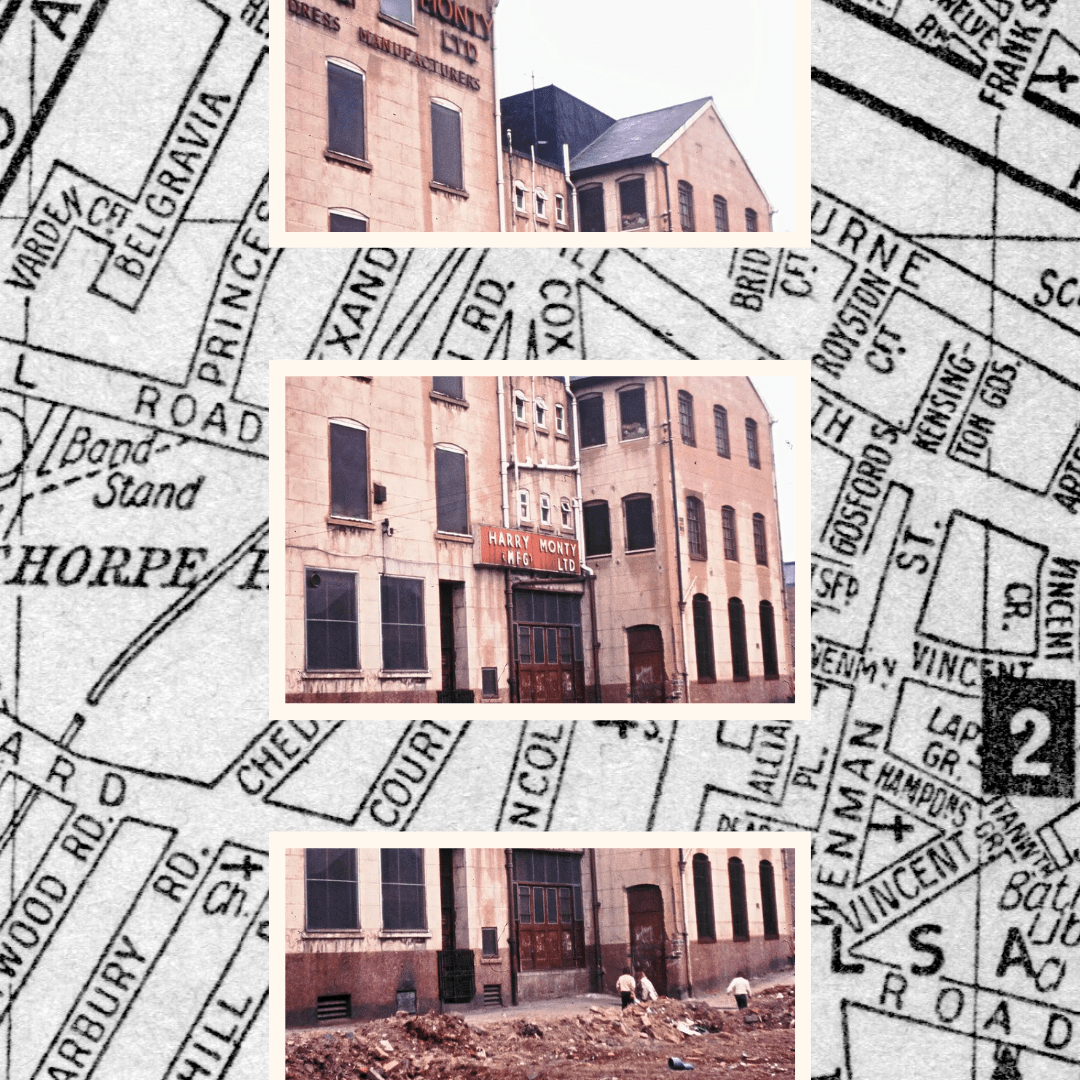
The following interview was conducted by Aqsa Sabir on 10 January 2023, as part of the BPHA’s Historic England oral histories project. Photographs from Birmingham History Forum. Transcribed by Poppy Griffiths.
If you are a retired worker in the West Midlands who would like to tell your story, or if you know someone with a story to tell, get in touch with us at gill@bpha.online.
AS: Today is the 10th of January 2023, the time is 11.24, I am Aqsa Sabir. Would you like to say your name?
EM: Elizabeth McKeon.
AS: Do you want to start by telling us about your early life, perhaps where and when you were born, about your family, such?
EM: I was born in Dublin, Ireland, I came over to this country when I was four, 1949. What do you call it? The whole family came over, we lived on the Stratford Road with my grandmother for a while. And then we got a house in Balsall Heath, and we moved in there.
AS: How has your family described that move from Dublin to here?
EM: Well, I was only four at the time, so I don’t know, I really know. My mother’s mother came over first, and we more or less we sort of joined them.
AS: Was there any particular reason?
EM: Well, my dad couldn’t get me work.
AS: For work?
EM: It was bad at the time, yeah.
AS: And how many siblings do you have?
EM: Eight.
AS: Eight?
EM: Yes.
AS: And do you have any memories of when you were younger, or some of your earliest memories?
EM: There’s nothing in particular that sticks out, what you call it, you know. I went to school in St Johns in Mary Street, which is not far from where I lived. And then, what you call it, I think we moved to Institute Road, yeah. Went to, what you call, Bishop Challoner. Bishop Challoner, yeah.
AS: Any memories from school?
EM: Nothing really was, we were very, very happy. Very happy family, there was always something going on, you know. A lot of music and things like that. We were sort of younger, the younger ones, where the older ones, like, you know, they were dancing and, yeah.
AS: And what did your parents do when they came here? What were their occupations?
EM: Well, my dad was a labour, but my mum didn’t work for a while, and then, as we got older, sort of older, what’s known, she’d take jobs out, but they weren’t part-time things.
AS: Do you have any, do you remember what jobs they were? Anything in particular?
EM: She worked in what, she worked where I worked, what’s known, in the kitchens there, cooking dinners and what have you.
AS: You worked in the kitchens?
EM: And then she worked in the Grand Hotel for a long time.
AS: And what about your dad? Your father?
EM: In Birmingham. Colmore Row.
AS: Do you remember growing up with your siblings having, you said, it was eight, did you say eight? Where about growing up in this city with your siblings? What was that like?
EM: Good. Well, to now we’re all very close.
AS: You’re already close. Yeah. And let’s talk about your first job. When was, what age were you when you got your first job?
EM: Fifteen.
AS: Fifteen. And what was that?
EM: In 1959, what do you call it? I worked at Harry Monty’s, which was, they used to make dresses for the catalogs.
AS: In 1959?
AS: Yeah. And how did you get the job?
EM: When I left school, same sort of thing.
We had to, you had to see somebody, you know, and that I wanted to be a tailoress, but then it worked out, you know, there wasn’t any doing it or something at the time. So I ended up being a dressmaker. Yeah.
AS: How did you hear about the job at first?
EM: Well, they more or less told me like where it was and what’s the name, because it were only down the road from where I lived.
AS: Was that the only choice or did you think of any other? Can you tell us a little bit about Harry Monty, the shop?
EM: What you call it? It was a nice place to work. Yes. I enjoyed the time I was there. Yeah. You learn from, from the start when you know, when you started there, it took a long time before you were even allowed to go on a comission. You had to learn all the time, you know, because I learned it from the right down up until I could make dresses then at the end.
AS: What was your first impression of the shop?
EM: Yeah. And I did. Yeah. But it was something I always wanted to do. I always wanted to do.
AS: So what did you start off with working? What did you do first? What was your task?
EM: What do you call it? The first was buttonholes, not buttonholes. You know the loopholes when you’ve got a belt on. Well, we had, we’d have to do them hundreds of them. And they were like a little piece of material. You just turned it over and you’re so down and then you had to get a hair grip and then push it through. You’d do that all day. I’ve done that for the first couple of years.
AS: How many years did you work there?
EM: About three.
AS: Three years. And what was the first year like?
EM: Just training, whatsername like? I was there about 12 months before we were even allowed to do it. We had to make things and little things.
AS: What was the training like?
EM: Very good. The people were very nice and what have you.
AS: How long was it? The training periods.
EM: Well, it wasn’t the time on it, it was just how quickly you picked it up. It was like when you did qualify, you’d start up, somebody would do one part of the dress, then you’d go to another one and another one and that’s it. And I used to put the zips in.
AS: Can you describe any other tasks you did?
EM: No, at the end that’s what I was really doing, just putting the zips in, dresses. I’d learnt how to make them, yeah.
AS: And what other people were you doing as well?
EM: Like I said, they’d start off, what’s known, doing the darts in the dresses and what have you, then they’d put the dresses together and then you were the last one, more or less, to put the zips in.
AS: Oh, so you were the one doing the things last at the end. And what were your working conditions like?
EM: Good. I found it alright.
AS: Do you think there was any negative part would you say?
EM: No, no. It was still a little bit like being at school when you first went there, you know, they still didn’t treat you as though you’d grown up, you know what I mean?
AS: Do you have any memories?
EM: Tell you what to do, like, you know, and if you didn’t do it. #
AS: Do you have any particular memories of when you felt like you were being told that you were too young?
EM: At the beginning, yes, I did, what’s now, but then, you know, once they got used to you, it was alright.
AS: Did you have a supervisor?
EM: I remember one day I had a supervisor and I said, what do you call it, you know, because of the way that they used to speak to you. And I said, what do you call it, you know, I’m not a child, I’m not at school now. You can’t tell me what.
AS: And you were 15.
EM: We’d grown up then.
AS: How many people were there at the factory, in the shop?
EM: Well, we had people that done pressing, they pressed all the dresses and what have you. It wasn’t a very big firm, really. It looks like from the pictures, it was whatsername, but then you had a cutting room where they had to cut, all the dresses had to be cut. Then there was like a storage space underneath as well. And then we were up on the top.
AS: How many people would you say roughly if you had to guess?
EM: I’d say about 60. Yeah, it wasn’t a smallish place.
AS: Do you think everybody knew each other?
EM: Yeah. Yeah. Definitely.
AS: Can you describe the work structure? So you had a supervisor, did you have any people below you?
EM: No, no. You had a supervisor which you know, come round and just make sure everything was alright. And then you had a lady in charge who overseen it all.
AS: And Harry Monty, do you know what the background was, who was Harry Monty?
EM: No. No. No, I don’t know.
AS: What would happen to the dresses afterwards?
EM: Well, whatsername, they’d be taken into the catalogues. They were sold all the catalogues, you know the books. Yeah. Kay’s catalogue and all that.
AS: Can you describe, can you name some of the catalogues? and what would happen to them?
EM: Kay’s. Kay’s catalogue and what do you call it? And a hell of a lot of them. A lot of them at the time. Yeah.
AS: But what was your relationship like with the people you worked with?
EM: Very good. Yeah. They were all young girls and older women, you know.
AS: They were just women?.
EM: Yeah. A lot of women as well.
AS: What was the youngest? How old were the youngest?
EM: From school. From 15
AS: And the oldest?
EM: I’d say near enough retiring age. Yeah. And they’re all different, you know.
AS: Did you make friends there?
EM: Yeah. Yeah. They were a good bunch of people. Yeah.
AS: Can you describe like the friendships and the relationships you’ve made there?
EM: You know, kept in touch with a lot of people after that when I left and what have you. Yeah. Well, you know, we had a good time.
AS: What was the best part of working there? Something you enjoyed the most?
EM: Well, when you’d been sewing them, you could still talk. There was the machines and then the other lot were facing. So everybody could talk to each other.
AS: Was it a social place?
EM: Yeah.
AS: And what were your thoughts about working there? Were you overall just happy with the place? Nothing negative. You weren’t tired?
EM: I was doing what I wanted to do. Yeah. I do. I was quite happy. Yeah.
AS: What was the day to day life like for you? Can you describe your day to day?
EM: Yes. I used to do it. We used to have to be in a half past eight in the morning and we worked until six in the evening.
AS: Six in the evening. It was a long day.
EM: Two pound, eleven pound. Eleven pence. Eleven pence. Is it eleven shillings? Yeah.
AS: It was a long day then. Long day. Was it tiring?
EM: Yeah. You go in, what do you call it, at half eight and then at twelve o’clock you’d have your dinner. I only lived round the corner so I could go home for dinner and then go back. That wasn’t too bad.
AS: How far did you live, away?
EM: As you come down the alleyway, what’s the name? It’s not far at all. About five minute walk.
AS: So you were happy you could just go home, have your lunch and come?
EM: Yeah. Lunch at home which was nice.
AS: Do you think that, what are some of your memories, anything particular when you look back something that stands out working there in those three years?
EM: Nothing particular worth knowing. It’s just that we all just got on. Everybody got on. They were all sorted like I said, a lot of them at the same age.
AS: Sorry, I’m just looking down. You worked here for three years at Harry Monty?
EM: Yeah.
AS: Why did you leave?
EM: Same thing, same reason, the money. I went then to work at what’s spot welding in my recs and what you call it. They do all the kitchen things, you know, where you put your dishes in and all that.
AS: When was this what year?
EM: In Wenman Street in Balsall Heath just round to the other side. What happened, whatsername, my friend and I went together and we got the job. It was ever so easy to get jobs in them days. We didn’t have any real trouble.
AS: How did you hear about the job at first?
EM: We just knew it. We were looking for people. Everybody talked to everybody. We were quite friendly like the neighbours and things.
AS: What year did you leave and then start your second job?
EM: Ill have to look at me notes. 1961.
AS: And you were part of the did you say kitchens? Can you repeat what you said about your second job? So you went there with your friend?
EM: Yes. Yes. We went together.
AS: What did you do there?
EM: I was doing spot welding.
AS: Can you describe what that is?
EM: You got the pieces of things and then you had to sort of weld them together. You know the baskets, you know, what’s known, when you put your dishes in when you’ve washed them. So we had to sort of, there would come pieces of wires and you had to put them in right places.
AS: And was the pay better then?
EM: Yes, eight pound. That was a lot of money compared to now.
AS: What was that your lead motivation to change them?
EM: I was very rich then.
AS: Was that the main reason why you left Harry Monty because of the pay?
EM: Yeah.
AS: And how long did you stay at the?
EM: Two years. Two years. Yeah.
AS: And do you have any particular memory from there?
EM: Yeah, it was alright. What’s the name? You know, it was a horrid job.
AS: It was a horrid?
EM: Yeah, but it was alright. But then you got paid better for it though.
AS: Horrid? Why horrid?
EM: Hard. Yeah, well what’s the name? You know, it was a lot of up and down. Wasn’t a choice really. Why?
AS: Why was there not any choice?
EM: It wasn’t one of the best jobs I had.
AS: Why do you say that?
EM: I don’t know. What do you call it, you know, it was quite dirty as well, which was quite different to what I’ve been used to.
AS: So the working conditions, what were they like? It was dirty?
EM: Well, not too bad. What’s known. The only thing is you’d have to go up these big long steps you know, to get into the place. They’re all little areas.
AS: Can you what it physically looked like?
EM: It was sort of a big, what’s known. You know, you had like, as you go into the yard and then you had one part there and one part there. So when you needed somebody you’d go from one to the other. So it could be a lot of walking.
AS: So it was very far. How long did it take, do you remember, from going one side to the other?
EM: Not that long. Yeah. What you call it, you’ve just got to go down one set of the stairs and up another lot and you know.
AS: What did it physically look like from inside?
EM: Well, when you went into the front like gates, right? And like I say, a courtyard. Yeah, courtyard. You know all the areas were up there and up, but they were all upstairs.
AS: And you described it as dirty.
EM: It was like, yeah, it was.
AS: What else was it like?
EM: Bit like yours, wasn’t it? (to husband)
AS: What else was it like? It was dirty and what else were the physical conditions of the place?
EM: Oh no, no, it wasn’t a bad place. What do you call it? But because you were metal and what have you. You know, you had to have stuff on your hands every day because you got a little mark from all the stuff.
AS: Was this bigger than Harry Monty? Was it a larger?
EM: No.
AS: What was the size?
EM: Harry Monty’s was a bit more like, you know, personal and what have you, whereas that wasn’t quite as personal.
AS: Was there more people there?
EM: No, I’d say about the same. Wasn’t a very big place.
AS: And did everybody know each other there as well?
EM: Yeah. No, not really because you just kept in one area. You knew the girls on that particular area. Then you’d have your foreman, he’d work in the same room.
AS: Do you remember your foreman?
EM: The foreman were always men. They were always men.
AS: And you stayed here for how many years?
EM: About a year and a half, what’s known, because they were moving and they moved up to Alcester. Yeah, just the other side of King’s Heath. They wanted us all to go with them, but of course it didn’t suit us. So I went back to Harry Monty.
AS: Oh, you went back to Harry Monty? And when did this happen what year?
EM: 1963.
AS: 1963. And you went back to Harry Monty?
EM: I did, yeah.
AS: And had things changed since then?
EM: No, no. The same sort of thing.
AS: Did you have the same tasks as you did?
EM: Yeah, back to the same thing.
AS: And during your time here, did you have any chance of work leave? You can leave work.
EM: You didn’t do any higher or any what’s name in there. That was it. That was your job. It started from the bottom and then worked your way up and then that was your job. Permanent job.
AS: What about the pay? Was it the same?
EM: No, I had to go back down and what’s known, you know. But it was either that or take this other job and got a long journey to go to work.
AS: So how did you feel going back to Harry Monty after this?
EM: Fine. Fine. Just went back and said, “Oh, you know, I’d like to come back.”
AS: And nothing had changed at Harry Monty?
EM: No, not really.
AS: And how many years did you stay at this point?
EM: Well, whatsername? I got married in 1964. And then I had my first child in 1965. So I gave up work then for a while. You know, whatsername? As we moved around. Then there’s… Oh, in 1969 I got a job on a profit and finance company. It was like going around collecting money on weekends and you had to do all the books and all that. And I stayed there for 21 years.
AS: 21 years? Can you describe what the actual tasks are? What was a day-to-day life like? What did you do?
EM: It wasn’t a day-to-day thing. You’d go in on a Monday, pick your books up. Right? Then what do you call it? It’s Friday then. Now to take your books in, to pay your money in. Then on the Friday you’d have to go back and get your books again. And then you had to collect them Friday night, Saturday and Monday. And then back again. That’s how it was worked. That was the job. But it suited me because I’d got… By then I’d got 4 children.
AS: And how many years had it been since you last worked? Because you worked in 1969 and how many years had it been since?
EM: Well, 65 I left Harry Monty’s. So that was four years or five years.
AS: And what was your life like during that period, during that gap?
EM: Bringing up children. Having babies.
AS: And was this still in Birmingham?
EM: Yeah. Yeah. In Balsall Heath. In Balsall Heath.
AS: And what was Balsall Heath like then? What would you say to somebody from… Describe Balsall Heath in the 1960s?
EM: It wasn’t the same as when we went there because when we went there at ‘49 it was quite upmarket sort of thing. But then like everywhere else, things changed. People moved. And then of course when they built up, what’s known… Chelmsley Wood, a lot of people moved out, from the inner city bits. It was classed as an inner city bit.
AS: Did anything particularly happen during the 1960s in Balsall Heath or anything that you remember in Birmingham?
EM: Not really. I was too busy looking after my children. It wasn’t that much going on in my life then.
AS: And did your husband work at this time?
EM: Yes, he did.
AS: What job, what was his job?
EM: He worked at the Delta Metal for a while. He was a forklift truck driver. And then what do you call it? He was made redundant. And then he went to the Rover.
AS: And what year was that? What year was that when he went to Rover?
EM: About ’73, ’74.
AS: And going back to the finance company in 1969 you said, how did you hear about it?
EM: My sister was working there at the time, what do you call it, and she got me a job. Like I said, the job suited me because I could spend time looking after the children in the day and I only worked a couple of hours at night.
AS: Did you enjoy it?
EM: Yeah. I did, what you call it, was hard work. You had to make sure you get your money. Knock on doors and pick money off people. You have to walk around with a lot of money.
AS: Do you have any particular memories from this job?
EM: Lots of them. Especially when they didn’t pay up. And then you’d have to go in and they’d say, why didn’t they pay?
AS: Was there anyone in particular you remember? Anything that happened?
EM: No, I’m not really sure. No.
AS: How would you describe what you felt during this job?
EM: Like I say, it wasn’t a job that I loved. Like I say, it fitted into the family. I didn’t have to pay anybody to look after children or anything like that. And I spent my time with my children.
AS: What about the actual conditions of the job going and knocking on people’s door? How would you describe that?
EM: I enjoyed that part. Got to know people. And they became friends really.
AS: You formed friendships.
EM: Yes. There was a lot of people. Even now when I go around Chemsley Wood, there are people I used to call on after all these years.
AS: And you were still friends with them?
EM: Yeah.
AS: So this job was influenced because of your family, of raising a family. So it was easier.
EM: Yeah.
AS: Was there anything that during this time from the 21 years you worked, was there anything in Birmingham that stood out to you or any historic or something national that you remember?
EM: I can’t say. I can’t really remember anything. No.
AS: Do you think jobs for women had changed then as time went along?
EM: No. We never had any problem getting jobs at all. I did do like, what’s the name, worked at the NEC for a while in early mornings and done that sort of odd jobs here and there.
AS: When was this?
EM: Yeah. When Nicola was, what would she be? When the girls started school.
AS: So between the 1965 to 1969 that period had off.
EM: Yeah. And then I’d done a job, still doing the provident as well, but then I’d done a job as an area supervisor for a cleaning firm. What’s now, which I enjoyed, had some travel a lot around Birmingham to do different places.
AS: And this was in the sixties?
EM: No, this was in the seventies.
AS: Seventies. Alongside your other job. So you were juggling two jobs. What was that like?
EM: But like I said, they weren’t jobs that you’d spent hours and hours. It was like, what do you call it? The one I only done certain nights and then the other one, I just had to go around and see that they were doing their job.
AS: You had night jobs and you were raising kids?
EM: Yes, you had to go into Birmingham and like I said, people that were working there, cleaning the offices and what have you. You just had to make sure, checking they were doing what they were supposed to do.
AS: And there you were supervisor?
EM: Yeah.
AS: And how much did you earn here at this job?
EM: How much did I earn?
AS: Your salary. Yeah.
EM: It was quite well paid for what I had to do. I was quite happy with it.
AS: What was it like having those two jobs and raising your family?
EM: Tiring. But it was necessities as well as everything else. If you wanted things, you know, didn’t have much choice.
AS: And your job as the supervisor, how would you describe that? How did you feel working?
EM: I enjoyed what’s known because, you know, what’s known, I had the car, I’d go drive to these places. So, you know.
AS: Can you describe what you did?
EM: Like I said, you just go into them what’s known and just make sure everything, everyone was happy, you know, and if there was any problems, you’d have to sort them out. Something didn’t turn up you’d help out here.
AS: How many hours was it?
EM: About three. It wasn’t a long, what’s known. But sometimes if you got a couple of areas that you were doing, that was it. You just went home. It wasn’t like you weren’t on a set of hours. It’s quite nice.
AS: How would you describe the working conditions there?
EM: Good. What’s known. But the woman that I worked for, what’s known, I used to collect on her in the Providence and we were quite friendly. And the one day, what’s known, she asked me if I was interested in this other job. And then I, you know, I said, “Oh, I don’t know.” She said, “Why don’t you come up for a week with me and see how it goes?” But I was still working, like I said, I was known. And so I’ve done the week and what’s known. And of course I got a car with it as well. So that sold it.
AS: This was in the 70s. You started the other job. And how long did you work with that and juggle the two?
EM: About four years.
AS: Four years. But you stayed 21 years with the company. How come you left with the supervisor job?
EM: Well, in the what’s known, the business she owned in the business at the time, but then there was a bit of trouble. You know, like I don’t think they were doing too good or something. So I took on a bit of cleaning for a couple of years as well. Instead of like that job, I was doing the cleaning.
AS: You were cleaning as well and that was four years, you said?
EM: Yeah.
AS: And did you take any other side jobs or anything, any other things during the 21 years at the company?
EM: No. Oh, in between, yeah. Only like little jobs here and there, but they didn’t last long.
AS: How come?
EM: Well, what’s known, they were like, you know, something you do for a very short time. I mean, you know, Southalls. I don’t know whether you remember. I worked in there for about three weeks and I didn’t like it, so I didn’t go.
AS: What did you do?
EM: It was little things. Patches, the sanitiser towels. Lovely job.
AS: And you left?
EM: Yeah, what’s known, it just didn’t suit me. But like I said, there’s other little jobs that I sort of done on and off. What’s known?
AS: Can you name any?
EM: I worked most of the time from being, you know, when I was married and the children, having children and them growing up.
AS: Can you name us some of the little jobs that you’ve done?
EM: Like I said, bits of cleaning and I worked at the NEC, whatsername, you know, serving in what you call it, the private suites things.
AS: And did the money help?
EM: What you call it. But then the girls were all at school, so, you know, it was easy to do that. I used to do that during the day, so it didn’t affect anything.
AS: And you left after 21 years?
EM: I did. You know, I walked in and told them what to do with it. I’d had enough.
AS: You had enough? Why is that?
EM: I don’t know, just whatsername. Things changed. You know, when you first started the job, it was, it’s all right. And then what you call it, they’d gives you targets that you have to reach, right? And then you’d reach that target and then that up it and you’d have to do more and more. So in the end, I thought it’s too much stress.
AS: How does that make you feel having those targets and meeting them and getting them?
EM: very stressful.So hard in the end, you know, you were having to try and to keep the business going all the time. You’ve got to get more customers, you know, all that.
AS: Does that affect your working relationship with everybody else? Having those targets and having them?
EM: No, in the end, I got that I didn’t like the job at all. I’d really had enough. And then the one day I went in and I had, what do you call it, the manager. And he, what’s the name? He called me by my number instead of my name.
AS: How does that make you feel?
EM: Not very happy at all. And I, you know, and I had a bit of a word and I said to him, I’m not a number. I’ve got a name and you know it. I said, what you call it? And that week I thought that’s it. And I went in on the Monday and paid in and I said to him, can I have a word with you? Yeah. And I sat down and I said, when I’m, I’ve paid in now. I said, what? No, I’m never coming back. I walked out.
AS: Do you remember what he said?
EM: Well, it wasn’t very happy I was leaving.
AS: What was your relationship like with your manager?
EM: Horrible. We had a few managers. Some of them were nice. What’s the name. Really nasty. Youngish lad. Yeah. Well, trying to make a name.
AS: How many managers did you have during the 21 years?
EM: I’d say about five.
AS: Five?
EM: Mm hmm.
AS: What about your relationship with your other managers?
EM: I think I was all right with most of them. Yeah.
AS: Do you have a particular favourite? We know who you disliked.
EM: Well, what’s the name? Because it was mostly men, what’s the name? But then there was a one, the one was a woman, what’s the name? And I thought, I’m all right with her. Yeah. I never had any trouble with, what’s known, any of them really. Yeah. Just went in, because we didn’t spend a lot of time with them. You’d just go in and pay your money and then you’d go home.
AS: And how was your family like a life like during these 21 years as time went on?
EM: Well, what’s known, my husband used to mind them when I’d go out. So they were all right. Yeah.
AS: How many hours would he take care of the children then and you’d be gone?
EM: My husband had come, when he’d come into work, he’d come home from work and then I’d go out and I’d do the job then and come back. Yeah.
AS: And what was he working as then during this time? What was his occupation?
EM: It was a forklift drive, driver at rover.
AS: And how many years did he work there whilst he were working at this company?
EM: Oh, okay. He started there in 1973 and then he retired at 58 through ill health.
AS: And did your occupations ever affect your family life?
EM: No. It was always the family first.
AS: Yeah. Is that your your belief, yeah. But is there anything with this company that you look back on, any particular memories, anything that stood out, anything that you look back at now that stands out and you remember vividly? Yeah. Like the 21 years?
EM: No. Not really.
AS: How do you look back at that job now?
EM: Like I say, what do you call it? You know, it said the purpose. You know, it was a case of like, you know, I don’t know if you need the money, you have to go out and earn it. I think it was.
AS: And was the money better? Was it the money at this company? Was it better than your previous jobs?
EM: Yeah. Yeah. It was your own commission. So the more you collected, the more you earned.
AS: How much were you earning at this time?
EM: Oh, well, I’d say you could earn up to a hundred pound, because I had a good round.
AS: And you left after the 21 years and what happened then at this point in your life?
EM: Not long after that, my husband became ill and I looked after him for about four years, five years before he died. And that’s my working life. I retired then because I was a retirement age.
AS: When you were at the retirement age. Did you ever think about having a job? Did you ever think about getting another job or just getting something that you didn’t want to?
EM: I actually did. But that was what you call it. My daughter was working at the school and they were looking for somebody to help out in the offices. And she just said to me, you know, because I used to collect money and what have you. And I’d done that for two years.
AS: So you worked as well?
EM: You know, when they’d pay dinner money and things like that. Yeah. I went back to work for two years.
AS: What year was this?
EM: My husband died in 2004. It was 2005.
AS: And it was only two years?
EM: And like I say, whatsername, I’d just retired with whatsername, and started again. And I’d done two years there. Then what you call it? I used to do that job, but then you had to pay, whatsername, you know the PayPal thing. And then the people used to have to pay their money in there. So there was no work for us. So whatsername, you know, there was nothing to do. But I was quite happy with that because it was only whatsername, only went back a couple of years to help out. And that’s it. I haven’t worked since.
AS: How do you look back at your working life now?
EM: It’s hard.
AS: What would you describe it in one word if you could?
EM: I suppose whatsername though, I had to be doing something anyway. You know, I’m not one to sit around and do nothing.
AS: Is there anything that you look back on through your entire working life from Harry Monty to the office job for two years? Do you look back at anything in particular?
EM: Not really.
AS: No favourite job?
EM: No, not really. I did enjoy the whatsername, the business, the supervisor job because each day it was different, you know, different places. I enjoyed that more than any of them.
AS: And you said you wanted to go into dressmaking. Did you ever think about returning to that in later life?
EM: No. I did do whatsername though, when you know my daughter got married and made her wedding dress and bridesmaid dresses and things like that.
AS: Was that from your experience at Harry Monty that you used to make dress?
EM: Yes. I used to make some children’s clothes when they were little.
AS: For your children? Did you make anybody else any dresses or clothes or anything other than family?
EM: No.
AS: Is there anything that you want to say, any last thing you want to say about your working life or about your life in general?
EM: I had a good life. Very good. I had a good husband so everything was fine.
AS: And your children?
EM: I don’t regret anything.
AS: You don’t regret anything?
EM: No, not at all.
AS: How about one thing that you really look back on, one thing that really stands out to you in your life, whether it’s work, whether it’s family.
EM: Having my girls.
AS: Having your girls. And how many, sorry, you said you had four kids?
EM: I ended up with five.
AS: When was your fifth child born?
EM: Ten years after my fourth.
AS: Thank you.
 Birmingham People's History Archive
Leave a comment